Creative Draping & Fabric Techniques to Elevate Your Tent Aesthetic
A tented event doesn’t have to feel like a blank canvas — in fact, that’s where the magic begins. Draping and fabric design can completely transform a standard tent into a stunning, personalized venue. From soft romantic weddings to bold corporate galas, the right draping elevates mood, defines space, and ties your entire design vision together.
This blog explores the most creative draping and fabric techniques you can use to make your tent unforgettable. You’ll learn about the most popular styles, how to choose the right materials, and practical tips for installation and planning.
Why Draping Matters in Tent Design
Tent draping is more than decoration — it’s a design tool that can solve functional challenges while creating visual impact. When you incorporate fabric thoughtfully, you get multiple benefits:
Transforming the Space – Draping hides framework, softens harsh lines, and creates a luxurious environment.
Controlling Light – Sheer fabrics diffuse natural light for a softer glow, while opaque panels block harsh sun or create intimate evening settings.
Enhancing Acoustics – Fabric absorbs sound, making speeches, music, and conversations clearer.
Defining Zones – Draping can separate dining, lounge, and dance floor areas without physical walls.
Adding Branding or Theme Elements – Corporate logos, color palettes, and textures can be integrated through fabric selection.
Popular Draping and Fabric Techniques
There are several ways to use draping creatively depending on your event style, budget, and the type of tent you’ve chosen. Here are the most impactful techniques:
Ceiling Swags
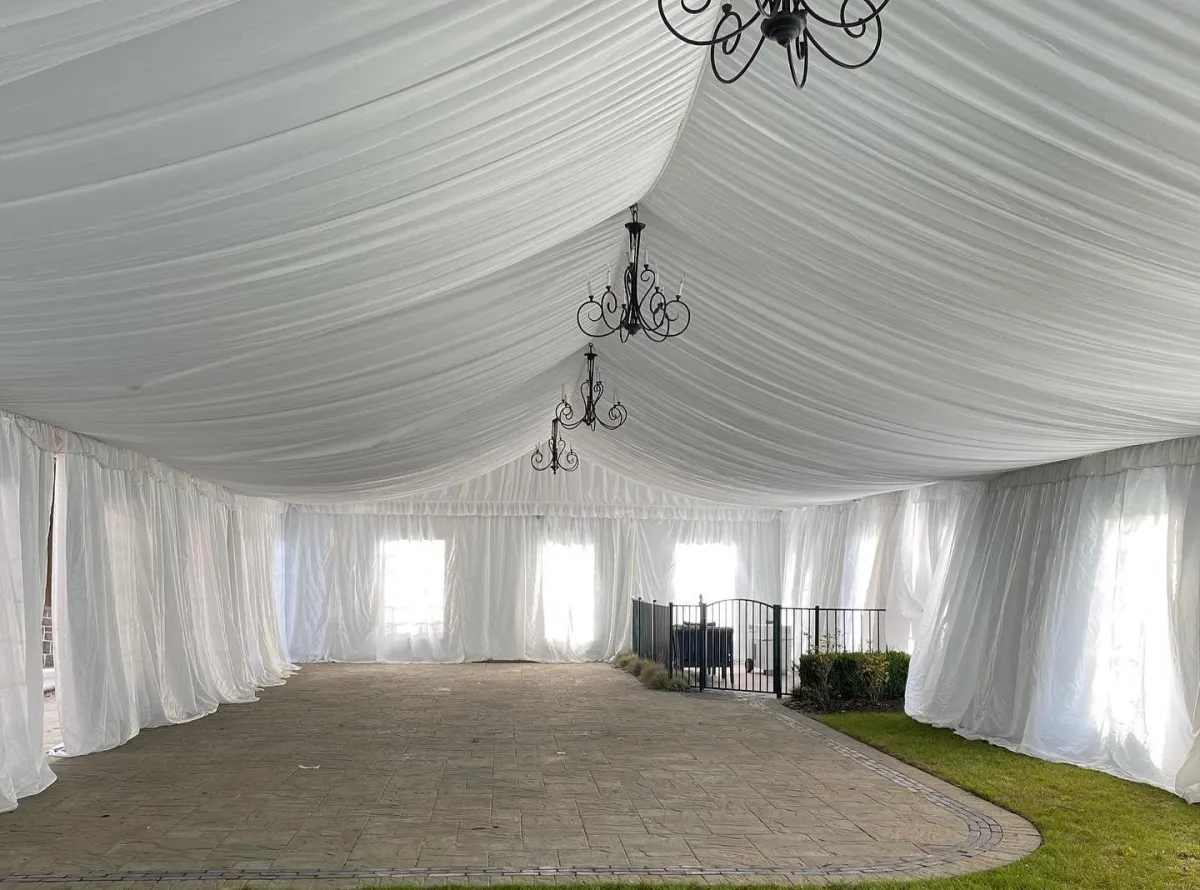
Ceiling swags are one of the most dramatic ways to change a tent’s look. Long panels of fabric radiate from a central point or beam, creating a canopy effect. They can be done with sheer voile for an airy look or rich velvet for a more formal aesthetic.
Perimeter Wall Draping
Wall draping conceals tent poles and creates a polished backdrop for the entire space. You can go with full-length panels for a seamless finish or partial sections for a more casual style.
Fabric Dividers and Backdrops
Use fabric partitions to frame a sweetheart table, create a photo backdrop, or separate catering areas. This keeps the focus on key elements and creates a sense of intimacy.
Pole Wraps
When tent poles are visible, pole wraps soften them with spiraling fabric or vertical panels. This small detail can make the tent feel intentional and cohesive.
Layered Textures
Combine multiple fabrics — such as sheer overlay panels with opaque liners — for depth and dimension. Layers also let you play with lighting effects like backlighting or uplighting.
How to Plan Your Tent Draping
Getting the look you want requires planning. Here’s a step-by-step guide:
Step 1: Define Your Style and Theme
Decide whether you want the event to feel airy and romantic, bold and modern, or formal and classic. This will guide your choice of fabric type, color, and density.
Step 2: Choose the Right Fabric
Common choices include sheer voile for light and airy designs, satin or polyester for smooth elegance, or heavier fabrics for dramatic statement pieces. Always balance aesthetics with budget and practicality.
Step 3: Map Out the Tent Layout
Work with your rental company to review your floor plan and mark key focal points — entrance, stage, dance floor, bar — so draping enhances rather than obstructs flow.
Step 4: Coordinate with Lighting
Draping and lighting work best together. Plan for chandeliers, uplighting, or string lights early so they integrate seamlessly with the fabric installation.
Step 5: Schedule Installation
Draping takes time to install properly. Ensure your vendor has adequate setup time before the event and that the installation team is experienced with your specific tent style.
Step 6: Consider Weather and Safety
If your event is outdoors, make sure fabric choices are flame-retardant and appropriate for wind or humidity conditions. Secure anchoring and weight distribution are essential for guest safety.
FAQs
What Fabric Works Best for Tent Draping?
Sheer voile and chiffon are popular for a light, airy look. Satin, polyester, or velour can create a richer and more formal vibe. Always choose flame-retardant materials for safety.
Is Tent Draping Expensive?
Costs vary by tent size, fabric type, and complexity. Full ceiling draping is more labor-intensive, while simple pole wraps or backdrops are budget-friendly options.
Can I Combine Draping with Lighting?
Yes! In fact, pairing draping with chandeliers, fairy lights, or uplighting creates a dramatic effect that enhances the overall atmosphere.
Do I Need a Professional for Installation?
Professional installation is highly recommended. Draping must be properly secured and evenly hung to look polished and to meet safety requirements.
Can Draping Be Done in Any Tent Type?
Most tent types — frame, structure, pole — can be draped, but the techniques may differ. Your rental provider can recommend the best approach for your specific tent.
Local Considerations for New York Events
In New York and Long Island, tent draping must often meet venue guidelines for fire safety and installation. Local weather conditions can affect fabric choices — heavier fabrics may not be ideal for humid summer days unless paired with climate control. Working with a vendor familiar with regional venues ensures compliance and a smooth setup.
Conclusion
Creative draping and fabric design turn a standard tent into a spectacular venue. From ceiling swags to custom backdrops, the right fabric choices elevate the entire guest experience, creating a space that feels tailored, intentional, and memorable.
When planning your event, collaborate with a rental provider who understands tent design, lighting integration, and installation logistics. The result will be a cohesive look that impresses your guests and photographs beautifully
