
Serving Long Island and New York Tri State Area
BLOG
Tents vs Indoor Venues: Which Works Best on Long Island
Long Island offers a wide range of event settings—historic estates, coastal restaurants, vineyard lawns, waterfront pavilions, private backyards, and open gardens. That variety often leads to one of the biggest planning decisions early on: Should the celebration be held in a tented outdoor setting or inside a traditional venue?
Both options can be beautiful. Both can be executed at a high level. But they create very different experiences. Understanding those differences helps you choose the setting that best reflects the purpose, personality, and atmosphere of your event.
This guide breaks down how tented events and indoor venues compare in terms of style, logistics, flexibility, and guest experience—specifically for Long Island’s terrain, climate, and event culture.
The Atmosphere: Structured vs. Custom
Tented Events
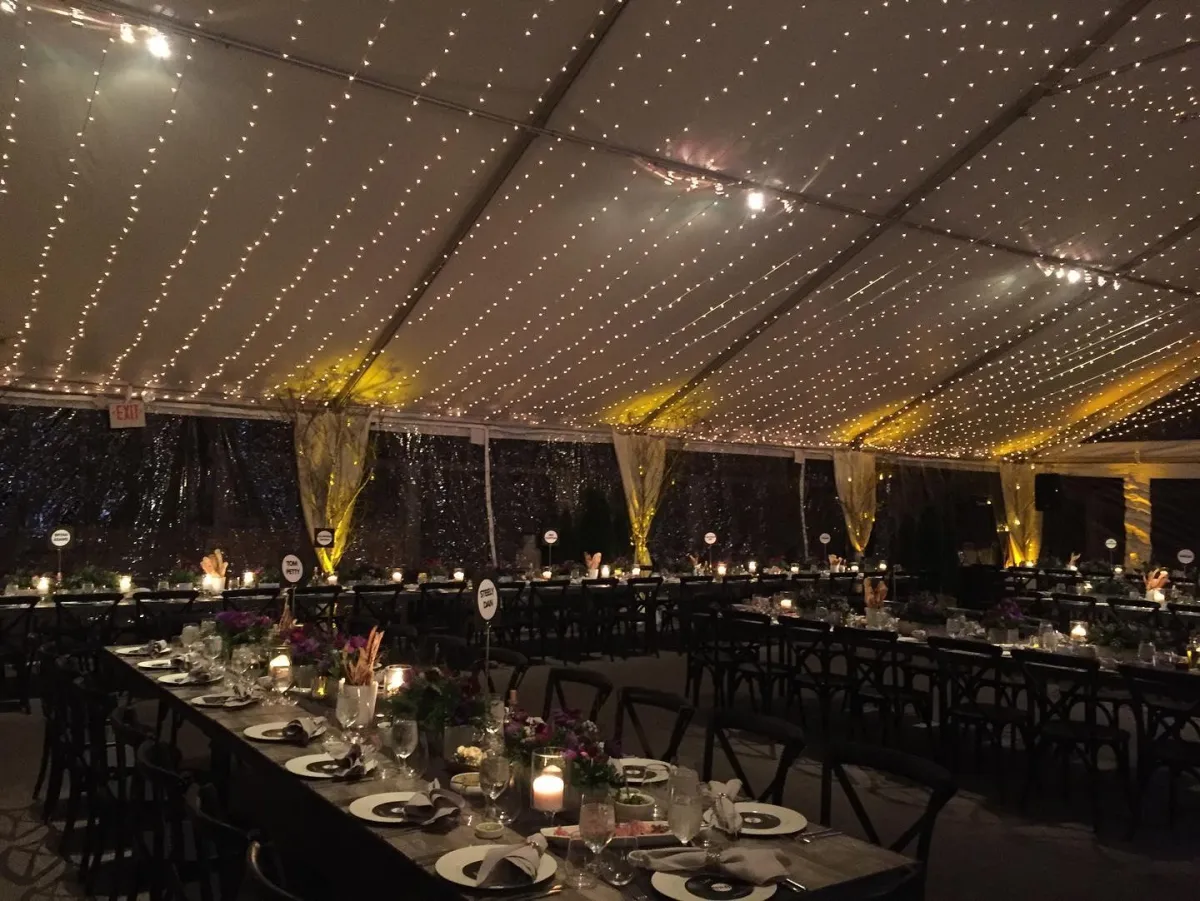
A tented setting gives you a blank canvas. The surroundings—water, trees, sunsets, gardens—become part of the event’s visual identity. You’re building an environment from the ground up, which means you can tailor mood, lighting, layout, and flow. It’s atmospheric and immersive.
Indoor Venues
Indoor spaces provide a defined aesthetic from the start. The architecture, lighting, and layout already exist. That can be grounding and cohesive, but it also means the tone is largely predetermined. Style adjustments happen within the room rather than by shaping the room itself.
The difference is freedom vs. structure.
Logistics & Planning Factors
Below are the core considerations couples and planners navigate—this is where the decision becomes practical, not just visual.
Weather
Tents require comfort planning (heating, cooling, wind management). Indoor venues offer automatic climate control.Layout Control
Tents adapt to site shape and desired flow. Indoor venues follow fixed room design.Scheduling
Tents often require day-of or day-before setup depending on property access. Indoor venues follow fixed timelines.Guest Capacity
Tent sizing is flexible. Indoor capacity is capped by fire code and layout.Vendor Coordination
Tent events often require coordinating multiple vendors for flooring, lighting, furniture, etc. Indoor venues streamline these under one roof.
Neither option is inherently easier—it depends on what kind of planning experience you want.
Cost Considerations
Outdoor tented events can feel luxurious and natural, but they require more build-out. Indoors may appear more cost-efficient up front, but venue package structures vary.
Typical differences:
Tented celebrations involve line-item decisions: tent size, flooring, furniture, lighting, temperature planning.
Indoor venues charge in bundled inclusions, which may simplify choices but reduce customization.
Cost is less about “cheaper” vs. “more expensive” and more about control vs. convenience.
When Tents Work Best
Choose a tent when the environment itself is part of the vision.
This is ideal when:
The venue has outdoor beauty worth highlighting
You want the layout to feel fluid, social, and connected
Lighting and atmosphere should evolve over the night
Personal details and curated style matter
You want the event to feel like an experience, not just a gathering indoors
Outdoor tent weddings and galas on Long Island often feel alive, because the surroundings shift with time and weather.
When Indoor Venues Work Best
Indoor venues make sense when the priority is ease, schedule control, and built-in structure.
They are especially suited for:
Winter events
Guest lists requiring a clearly defined dining room + dance space
Events with very tight schedules or setup limitations
Hosts who prefer a straightforward planning process over customization
Indoors favors predictability and simplicity.
Real Scenario: Same Wedding, Two Different Experiences
Imagine a summer wedding in Oyster Bay.
In a Tent:
Guests arrive to a golden sky. Cocktail hour blends into lawn space. As evening settles, bistro lights glow and the tent becomes warm and intimate. The sound of the water and night air become part of the celebration. The atmosphere evolves as the night progresses.
In an Indoor Venue:
Guests enter a polished, defined ballroom. Lighting is controlled. Floors are smooth and consistent. Weather doesn’t influence the mood. The focus is on conversation, music, and dining rather than the setting itself.
Neither is better. They simply feel different.
FAQs
How do I decide between a tent and an indoor venue?
Focus first on the emotional tone you want—from structured elegance to natural openness. Then consider logistics.Is a tent more work to plan?
Tents require more coordination because they involve multiple elements. A planner or experienced rental company simplifies this.What about unpredictable weather?
Tented events must plan heating, cooling, and optional sidewalls. With the right setup, weather rarely disrupts comfort.Does a tent always cost more?
Not always. But tents offer customization, which tends to expand design choices—and investment. Indoors is more fixed-cost.
Conclusion
The choice between a tent and an indoor venue isn’t about which is “better.” It’s about which reflects the experience you want to create. Long Island gives you the freedom to choose a celebration shaped by nature and atmosphere—or one framed by architecture and refinement. Both can be beautiful. The right one is the one that supports how you want your event to feel.

Our Services
CONTACT INFORMATION
Phone: (631) 491-5507
Business Hours:
Mon - Fri 9:00 am - 5:00 pm
Sat - Sun By Appointment
AREAS WE SERVE
© 2024 Nassau Tent. All rights reserved